Saturday, October 15, 2011

He maps the mind


And this is what I do when I'm not thinking about my anxiety.

Sertraline: week one retrospective


It's been a while since I last posted. Mike Patton will catch you up on the developments.

For those of you who can't listen to that performance, despite its brilliance, for more than three seconds, well, now you know why I'm taking tranquilizers. The gremlin working the switchboard in my sympathetic nervous system wants to do with my brain whatever the hell it is Mike Patton does with his voice.

I also really like that the guy who uploaded this video tagged it as "Mike Patton bonkers," as though Mike Patton weren't always doing that. I'm fairly confident that he scat-screams even in his sleep or when he's putting his dog in the bathtub.

Tuesday, October 11, 2011

For the good of the group

One of the classics.

Tonight I attended an Intensive Outpatient Group meeting, where closet Orwellians herd dysfunctional human livestock into rooms and smile at them for three hours. To spare us all the displeasure of being there, you in sympathy, and for the first time, and me in protest, for the second, I'll stenograph its minutes:

6-630: "Congratulations for not killing yourselves this weekend." "How's everyone feeling?" "Okay."
630-7: "Draw what makes you angry. Use these markers."
7-830: "Let's look at this table matching various emotions with facial expressions."
830-9: "You're not going to go kill yourselves right?"

From the program's multitude failings, I'll select two to explain why I won't be returning for tomorrow night's repeat performance. Let's start with the diction: "Intensive Outpatient Group Therapy." I won't object to identifying most of my fellow harrowers as outpatients, as five to seven of us, I gather, had only days before, or on that very day, been released from inpatient treatment. Technically, I suppose, we were a group, so that word bothers me only a little, although I should add that, as three of us spent the session in catatonic retreat, it does mislead one into believing us a cohesive charge of participating, healing beings. My two major complaints are with "therapy," which it decidedly isn't, and "intensive"; I've passed more intense purgatorial periods in line at the grocery store.

Therapy: from the Greek therapeuein, "to attend to, to care for." Not once in those three hours did I notice this happen, and I was paying pretty close attention, as the drab lamplight and the fat, dormant man sprawled in or on or around--a grammatical and structural conundrum, both--the chair opposite mine severely handicapped my distractibility. A more apt description for the night's goal would be "witnessing," as in, what happens at an accident. Patients talked, some cogently. The handsome woman at the front of the room, who leaned empathically forward, like a trained animal displaying its skill, at any verbal or near-verbal event--some were closer to protolinguistic bellows--acted like an actor, a "facilitator." I wrote a sonnet about doors. The fat, sleeping guy slept. Not a lot was attended to.

Intensive: I'm disappointed that so much can be spent doing so little for so long. Those who lobotomized themselves with me in E398T share my sad knowledge. The only thing intensive about our work tonight was the force with which it blocked progress. All evening the image came to mind of an eagle straining very hard not to fly.

Second, you would think that crazy people must have something in common to make them all crazy, some craziness factor, and that this common quality would provide a basis on which to develop useful, purposeful conversation. You'd be very wrong. It turns out people are crazy for all kinds of reasons, most of which are totally incomprehensible to other crazy people. Twice during the festival, when we broke for food and to get some space from the looming Weird, my mind drifted to the countless medieval dream visions in which birds and books argue with each other about which is better, combs or mirrors, while the dreamer, not fluent in their fake languages, wonders, what's with the comb, and the mirror, and what is that bird saying? Maybe I'm cynical, but I don't estimate as high the chances of success when you throw together in a locked room random people, with random, debilitating disorders and attempt to smile them into healing.

So, although I feel for every poor soul that I shared that room with tonight, and although I appreciate the municipal bureaucracy that organizes such services and renders them unhelpful, and although I wish us all the very best of luck, I think I'll spend tomorrow night at home, lonesome crazy, with a cup of ginger tea, a shedding rabbit, and my own unsleeping brain.

And for fuck's sake, pull the door.

Monday, October 10, 2011

Suffer well

I love every hammy minute of this video. I first heard the song when the band released Playing the Angel in 2005, a month or so before our equally hammy Qualifying Exam, for which I wasted a lot of energy very principally not preparing, more energy, probably, than if I had just humbled myself and read that terrible Mda book about gang rape and painting. But back to the song. The Frogger prelude, the crude swing in the rhythm, high theater in the bridge and the underworld trapdoor that follows the first chorus: it's a very careful song, clever and well crafted. Dave Gahan wrote the lyrics for it, too, which makes their relative lack of suck even more impressive.

But lately, and by 'lately' I mean every day for three months, I've played this song in my head, from beginning to end, until the refrain metamorphosed into a mantra. That sort of pop therapy can, and in my case definitely would, be moody and deplorable, real unmenschlich. It's the video, and in particular Dave Gahan's unconditional cartoonism, that shields me from castration by a late Auden sneer. As he whoops it up with a phallic triumph that rivals even the moon landing, Gahan goofs his way right out of parody and into something desolate and sober. His performance gets away with its jokey fit because the frame, before our eyes, deteriorates into real world ugliness, degrading his frivolity.

The video opens with an inventory of stock decadent tropes and gestures--stolen jewelry, New Jersey hair, neon--and we know soundly where we stand: mock-allegory, a sort of middle-schooler's redux of Piers Plowman. But as Gahan, Chaplinesque, careens from self-possession into ever less believable rakishness--he would be Gluttony, if you're curious, in that teenager's Langland--his decline--not its look but its purpose--turns authentically vile. As his character plunges deeper into caricature, the dirty, ordinary, vapid lostness of the sin paradoxically surfaces. As Gahan the person disappears into spoof, his absence lends ache to the lyrics. And that, I guess, is what pantomime is for. Clownish delivery disinfects the content, burning it like wilderness. No one wants to live in that. So the very things that signify humor--the exaggeration, New Jersey, angels--heighten our discomfort and refuse our laughter. And as they do, they become dimensional, tactile, sensible. From the cabaret debris we taste and smell and touch the noxious grime. Out of illusion comes sordidness. Reality arrives, and although we can't quite say when, we're not happy when it does. What's more, through all the plastic acting we never saw it coming. But by the end of the song, when Dave Gahan's dissipated reject from Harry Hope's bar in The Iceman Cometh speaks them for a last reprieve, those lines mean a hell of a lot more than they did at the start. Sometimes it really is hard to tell.

Auden called history a "squalid mess" and declared irreverence "a greater oaf than Superstition." "Oaf" may not be exactly the right word, and we're listening to music much less historical than transient (even if lovely). But I think the common terms apply. What "Suffer Well" offers is Weimar culture in a Crackerjack box. And if you know your caramel candies, you know what comes after the glut. Squalid mess will do nicely to describe that specific gravity of inner grossness and five-year-old's remorse. Sin is, after all, a defect of imagination. We're none of us very smart people.

Sunday, October 9, 2011

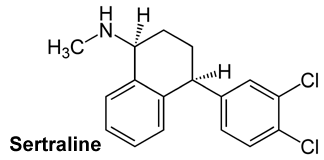
Sertraline: day four (2)

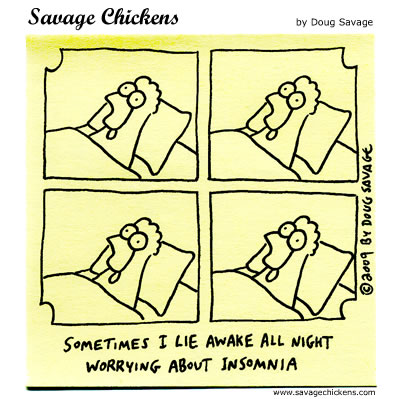
I have a lot in common with this chicken.
Today's complications:
  1. Fourth day of sertraline, which means my fourth day of insomnia. I'm beginning to look like Edward Norton in the first minutes of Fight Club.
  2. Neighbors set their apartment on fire this morning. Nearly burned the whole place down. Woke at noon to the acrid smoke smell of toasted cheap furniture and kitchen appliances. Then fire trucks everywhere. Then some loud, equivocating machine whose function, I'm guessing, is to suck up poisonous fumes and store them for later.
  3. Woke up from melancholy dreams and searched for two specific poems I'd written two years ago on that very subject, only to find them, as had Hadley her husband's suitcase on the 1922 train to Lausanne, irretrievably lost. So I got it in my head to write a Jean Cocteau-ish little poem about waking up from a dream feeling that something is missing, and remembering that I'd made art about that very feeling, only to find it missing. Maybe also I was asleep? No. That's for later, when I disinter Jean Marais' corpse and re-raise the Orphic stakes.
  4. Here's the poem I did write today, which is rambling, turgid, and slipshod. I don't like it. But I wrote it anyway, all day.
              
          
                        Souvenir

                                I.

How like a memory without a mind,
Sensation: a built darkness in the body;
Feeling of forgetting, where the thread
Spins backward to the spider that it bound,
If only for an instant, to its spinning.
I woke this morning, missing what to miss,
As though to think the absence would revive it.
Not likely. What I want is to relive it,
Remember not remembering; to lose it
Over and over, to repeat the pain
Of close-to-satisfaction; to seize air.
Desire is like a planet, in whose pinion
Dying stars sophisticate their stare  
Until there’s no more looking, only bone.

                                II.

More plain this time? Okay. I had a thought,
A reminiscence, flickering of a Proust.
I woke from dreaming, only to be used
To dreaming—wanting what is not.
By then, I’d grown attached to my desire,
But, sunlight like a Lethe, couldn’t know it.
I lay in bed, still poking at the fire,
Tracing the shadow that had sunk below it.
So like some Plato’s scavenger, I ate
Its ashes—not the glistening on the wall,
As chained men do—but let the fire burn out
Completely, then, with fury in my gut,
Turned hunger to its poverty, and, well,
The will is appetite; I let it wait.

                                III.

Too French? I’ll try again—the middle style.
This morning, I woke up, and when I did,
Remembered. . . nothing. . . not a grief or giddy
Rapt sensation—just a sense of missing.
What? I don’t know, and didn’t know it then.
But I suspected if I lay a while
And wondered at the nothing, I would soon.
I didn’t. So I got up, and, while dressing,
Suddenly thought about that line by Clare:
“I am the self-consumer of my woes.”
Perhaps the nothing that I woke to was
My own sensation, that I want to want?
That underneath my longing is a haunt?
Or maybe I’m just lonely, frank, and fearful.

                                IV.

Fuck it. A final effort. Get it right.
I went to bed feeling the scattered light
From some old, vacant corner of my mind
Illuminate, and blister, and make blind
Everything I had struggled to leave out:
That life is difficult, and knowledge, doubt,
And when we press our souls into a sieve
To strain them finer, it is they that give.
They buckle. And I feel it when I sleep,
The crack of bloated timber, and the creep
Of every thinning fiber as it slips.
I wake and feel unraveled as it rips.
I hunger for less nothing when I wake,
But know that with the sunlight comes the quake.

                                V.

No wonder that sensation makes me weak;
To feel the body, as a body, hurts.
It makes me less immortal in my lies;
And in my nerves, where the refusal burns
Electric-empty, the dry knocking chills me.
And as the body makes more body, I,
Reluctant to be anything but mind,
Forge cities from the fog that floats away,
Where all desire is a lust to dwell,
To be, to touch, to stay where form is certain,
Where nothing changes but the day of week,
And, even then, repeats its interval
To wind the brains of madmen like a watch.
There, in the unreal city, pleasure is control.

                                VI.

Letting go is learning to be sure
Of nothing. Waking up, desiring, dying,
What’s the difference? Anything is real.
Why should I worry at the cost? There is none.
This morning, when I woke to meet my fear,
Its cramp and clutter, and to care for it,
I let my nothing be, and wondered at it,
Is this what dying feels like? Just a tiredness?
It’s so benign. And terrifying. And obscure.
Death. Loss, Banality. They sound like love.
I want to let go, as I write this poem,
To learn to be more lonely, to be close,
And never not to feel it when I want you;
I must learn from my body how to die.

                                VII.

Close is a word we write when we mean separate—
Apart but moving toward each other, attracted
(Like Aristophanes’ carved animals)
To what we once remembered in what’s new.
The panicked heart needs splitting, and more spin.
More moving-to-it. More remoteness. More.
I want to remember what I never knew;
To breathe live innocence in lively bodies.
But isn’t waking a lesson in refusal?
Of course not. Sleep is when the soul remembers.
Waking decides the path and haste of pursuit,
Which half of the countless Halflings to be close to,
To desire, to feel lonely for, and to dream over.
Memory, like a muscle, opens and withdraws.

                                VIII.

Now scale it back. It’s easy to break through
But resting there is harder, where it’s stark
And lovely-clear like breathing. Practice darkness.
Wake with closed eyes, and keep them closed a while.
Loneliness makes closeness makes us whole
But appetite is an athletic peril,
And needs avoiding. Never trust in marvels;
Never refuse to marvel at them, though.
And when you go to sleep, and lose that thing
You call a person, summon it again
On waking, like the hero in a story.
He’ll suffer your deceit, and maybe hang
For petty crimes, or wander in the rain,
But he’ll be real enough until he’s buried.

Sertraline: day four (1)


Sertraline: day three

I don't see any grey, philanderer.
From Don Juan, of course, first canto, stanza 213:

But now at thirty years my hair is gray--
     (I wonder what it will be like at forty?
I thought of a peruke the other day--)
     My heart is not much greener; and, in short, I
Have squander'd my whole summer while 'twas May,
     And feel no more the spirit to retort; I
Have spent my life, both interest and principal,
And deem not, what I deem'd, my soul invincible.

That about sums it up. Thanks, Byron.

Saturday, October 8, 2011

Sertraline: day two

Gawd a'mighty.
On the evidence of yesterday's mania, concluding that an afternoon dose can only increase my chances of stomping bug-eyed through the fog at two in the morning as dopamine swells my brain to the size of a small moon, I took it promptly upon waking, with interesting results.

No discernible effect until late in the day, after some sedate exercise, when suddenly I got very tired. I did not appreciate this development, what with the fear-and-loathing redux from last night causing me to anticipate by the minute one of those hulking transformations into The Animal. Literally. I watched the clock all day, counting the number of minutes that passed since the last time I checked, which was a few minutes earlier, and adding that sum to the difference between now and my morning dose. Yesterday I went green four or five hours after dosing. I'm back from the gym, alert but not manic, and it's been seven hours. Then, like a Tartuffe's retort, I'm depleted. For two hours. Maybe I won't get wired today? Then I eat a bowl of rice and black beans and I'm wired. Just like that. Eleven hours after dosing.

So, tomorrow, who knows what to expect? But another night of insomnia looks certain. (Not that unnatural sleep habits don't come with their own privileges. About an hour ago, I caught a furtive opossum stealing whatever from the stray cat's water bowl on our patio, and that sort of witnessing, which is elsewhere impossible, has to count for something, an insomniac fringe benefit, I guess.

Also, last night, and I'm pretty sure I did not hallucinate this, a whole herd of deer not two houses down from me, seven or eight does and fawns at least. It was like an invasion. Then a hasty retreat. Then me standing there, staring at spaces where deer formerly grazed, wondering, can a person ride a deer like a horse? and why are there never any bucks? Probably better that I don't see the male deer. I've never been charged by an antlered animal, but I don't think I've got the rodeo clown's instincts to extract myself from that crisis without gaining some "speed holes," as Homer Simpson calls them.

Friday, October 7, 2011

Hare therapy

Shoes and accessory
Sure, they flinch at every noise
And throw a tantrum with their toys;
Bang their cages, nip their owners,
Spoil the gift to snub its donors;
Pee on what they know you covet
Just to make it clear, they love it;
Practice hard to stay a whelp
Just to taunt, so you can’t help.

But watch them closely, when they feel
No one plans to make a meal;
That no catastrophe can loom
In this silhouetted room.
Then you’ll find a gentler class
With other goals than to harass;
Prospects nobler, more germane
Than toiling just to be a bane.

When one flops, and lies unblinking,
Docile, purposeless, unthinking,
Lie beside it, and absorb
All the quiet of its orb;
Where no distraction, discontent
Makes chaos of its sole intent:
To charge the soul with emptiness,
And bid each new sensation, guess.

Go lie beside it; let it learn
Your body’s deep desire to burn
With cooler fires than language, reason,
Hot winds from the human season.
Its cataleptic credo quells
Any doctrine from our hells,
Where congregations twitch and writhe
To pay the absolution’s tithe.

No, there is consolation. Find it
In the animals who mind it;
Who, when unconscious, bid their heart
To make of innocence an art;
Listen closely to its beat,
Where you hear ancestral feet
Running out the mind’s unrest.
Lie beside it and be blessed.

Sertraline: day one

This image means nothing to me.
Today I took my first dose of sertraline, which may be my last, depending on what my psychiatrist says about how long I can expect to feel these unpleasant side-effects:
  • Agitation--of the "kill me because I can't stop moving" kind
  • Wiredness, which, after spending three years in an AD coma, I thought I would have welcomed; I don't
  • Unbraining, of the brain, which I think with
  • Probably never sleeping again
If she assures me that I'll spend a week or so like this, drifting from street corner to street corner like a wide-eyed, caffeine-fueled piece of trash, so be it. If she says, as I expect her to, "so hard to tell with these drugs," I may have to move on to another candidate.

I hear the sertraline "kick" comes from an inhibitory action it has on dopamine receptors. If you've ever done too much cocaine, and experienced the "why are my bones filled with lasers?" syndrome, or the "why does everything in my peripheral vision suddenly look, for a second, like an animal?" confusion, well, then you know what I'm feeling. If you haven't, and don't, bless you.

I never thought in my life I'd quote the Ramones approvingly, but, god damn it, I want to be sedated. Here's to the moment when peak plasma levels decline.

Wednesday, October 5, 2011

Wednesday, October 6, 2011, 2am:

Calmer than you are.
Tonight, or this morning, before bed, I will take my last dose of imipramine hcl, which, over four weeks, I tapered from 100mg down to 12.5 or whatever strength really dwells in the epileptic, dartboard-skewered quarter of a pill I cut. For three years it's been a cheap alternative to panic, and, although for whatever reason it no longer works at the level I need it to, and although it made me sluggish, unmemoried, and cholinergically arid, it did help a little to block what needed blocking. So despite turning me into a sedentary half-wit and, basically, a viscous, self-moving brick, and despite failing at its sole task when I most needed it, I'm more than a little afraid to be off it. A partial cure is better than none. (I suppose that, in the event that other options exhaust themselves, I can always crawl back to it, supplicating for a higher dose.)

Tomorrow I'm scheduled to begin treatment with sertraline, an SSRI--imipramine is a tricyclic--and to taper my Lexapro dose by half, which I'm only too happy to do, having for the past three years suspected its impotence. (Everybody's different; most seem to think it a miracle drug.) I'm not looking forward to the transition. Starting a new drug that rewires your brainstuff always hurts. It hurts when it doesn't work for a very long time, until it does, and even then, it still hurts with its side-effects. And it hurts worse when you suffer its company for weeks, and then months, and feel like hell as it burns you from within, scorching your brain white-empty and your guts red-useless, only to find that it doesn't work period. We'll see. But after four weeks of waiting, and another four weeks before that of wobbling, I need something to happen. If this change is for the worse, we cross off one drug and jump to another. If it's for the better, we save my life for another few months or years, or however long it takes me to steady myself from within, where the bell got rung and needs to stop swinging.

Wish me luck. The next few weeks may be very hard for me. Or maybe they won't. Psychopharmacology, it's no science, you know.

The Unwelcome Balloon

Feed me a grape, slavegirl.

                Out of the corner of his eye he glimpsed it, dangling there, like an unremembered name, the mysterious, floating menace. I don’t like it, he reasoned, it’s round like the sun and moon but close like birds. I should flee!
                At that he leapt from his perch, his body’s fat influence sending the cage bars, metallic and thin, into grim, responsive shivers. The violence was brief but final: the rabbit would not move.
                He had known these strange hanging things before. As a pup they glided over him, soft and insensible, these planetary gods. But they were mercurial, too, often vanishing even as they appeared. He wondered whether they were real beings, like him, or refractory phantoms spilled by the vertical blinds, where the sun played its magic. Or were they ancestors, come to watch over him? Or to judge him? Impossible to know. His pup’s brain ached with uncertainty.
                As he grew, the rabbit learned not to like new experiences. New smells brought danger. New people came with the smells. New spaces needed to be mapped and tracked. New foods threatened poison, some gardener’s revenge for the mischief his cousins made. New was taxing, difficult, open. New was the enemy of known. No, new would not do. The mature rabbit values the knowledge in his body, in his genes, in the racial memory of a billion beating hearts. Those hearts, like his, had survived not by choice but by instinct, grooving into the great Rabbit Brain, through millions of years of recurrence, the humble reward of old things: dependability. Old was safe. Old was restful. Old, like the powerless will of the prey, was, in its ancient way, a ritual, a respect.
                From the cover of his cage, from the perch under which he cowered, warding away the sky-stranger like a plastic, flat talisman, he concentrated very hard. I am a good rabbit. Here I am safe, where the round, close animal can’t find me. But what of the others? They’re in the kitchen! It can see them in there!
                 Twice, loudly, he thumped his back feet. Will they hear my warning about the round animal? They must. But why don’t they run? He thumped again, and again, insisting. Still they stayed in the kitchen, exposed, oblivious to the assassin lurking there in the air between him and them. It seemed unsure which to attack first. Almost imperceptibly it drifted toward one. Was that a breeze? Did it carry their scent to it? Then, almost imperceptibly, it drifted back, reposed, considering its kill. I must warn them! 
                Thump!
                Thump!
                Will it hear me and catch me here, under this perch? I have nowhere to run. But my warren must know! I will tell them!
                Thump.
Twice more, loudly, he brought down his back feet. Will they hear my warning about the round animal? They must! With a final, decisive kick at the grating, he split the room with his meaning. The bars enclosing him groaned in paroxysm. A fine powder snowed from the permanent white above.  

                THUMP!

Startled, his warren grew tense. They heard me! With a subtle liveliness his nose quickened. Now, at least, they had a chance. But they weren’t running from the sky-creature, and they weren’t hiding. They were looking at him, their eyes appalled. Run, he told them, run for cover! The round thing is floating! They only ignored it. Had they gone tharn? Had it scared them into stupor? He feared the worst for them. Soon, no doubt, the sky-thing would catch them. My warren is doomed!
                For what seemed to the rabbit a very long time—the length at least of an unhurried hay-grazing—one of the humans, the taller one, with the scanty fur and a smell of worry always on his skin, casually, indifferently, suicidally walked past the predator and, inexplicably, straight to the rabbit, who was, with all his small vigor, ardently wishing not to be approached. Is he crazy? He’s leading it to me!  The tall, patchy, stress-smelling one made unconcerned noises at the rabbit, who, in his fear, which was quickly turning to fury, made rageful communications at him with his tail, his ears, his pleading eyes. LEAD IT AWAY FROM ME!
                After standing over the rabbit for a few more moments—too many, the rabbit would tell you—the tall, unfurry, stress-smelling human arrived at a conclusion. As he did, a line from an old movie, which is something the humans look at when they tire of language or of each other, came into his head: “her mind is making a discovery.” In his soul he smiled. Without a word, he caught the air-animal by its thin, shining tail and took it away, out through the opening part of the wall where new things come in, and where the old things come back, and when he returned, as the old things unfailingly do, he was alone. The floating round animal was gone.
                How did he do it?? He vanquished the predator! He must be the bravest of all humans. No wonder he leads the warren. He is so tall and so valiant that he doesn’t need fur; his courage keeps him warm. And he always smells like work and worry, I bet, from fighting the dangerous ones. Next time I'll know: when the sky-creatures come, with all their ambivalent evil, my warren will conquer them. The worrying one will make sure of it.
                Having dispatched the balloon and made solid again the wall where the new things enter, surely to prevent a surprise raid from bigger, lighter, and more numerous balloons, the tall, unfurry, worrying one approached the rabbit, who, now convinced that the danger had passed, had climbed cautiously to the perch, where he had lain, plump and complacent, when the mysterious round stranger, that was too close to be sun or moon and too new not to be distrusted, first interrupted his evening, which, until then, had been just like the one before it, and like the one before that, and like every evening he could remember. Which is precisely how he, and all rabbits, intended it.

Tuesday, October 4, 2011

Parable of the two rabbits


                On the far side of a valley, where two streams merge to form a broad river, two rabbits, each from a slope of the valley’s walls that the other had never visited, chanced to meet. Looking for food, they had followed the streams to the point where the river gathered them together.
                “I’ve eaten all the food on the north slope,” said the larger of the rabbits, frowning. Exasperated, he explained that his warren, once strong and fruitful, had dwindled, gradually disappearing as it ravaged the once bountiful grasses growing on the valley wall.
                “I’ve followed the stream in hopes of finding more food,” he continued.
                The smaller rabbit looked puzzled. He too had followed the stream to find more food; his warren had depleted the rich grasses and flowers that once grew on the valley’s south slope, toward which the larger rabbit appeared to be traveling.
                “Well, you won’t find anything there,” spoke the smaller rabbit, tracing the path of the south stream with his paw. “Our warren ate everything.”
                The rabbits stared at each other, wondering what to do.
                The larger rabbit mused aloud: “if I can’t follow your stream, and you can’t follow mine, we’ll both have to find a new pasture.”
                Quietly, to himself, the smaller one added, “and if my warren’s gone, and if your warren’s gone, we’ll both have no one to mate with.”
                “But we’re both bucks,” cried the larger one. “We couldn’t mate anyway!”
                “Of course not, but together our wits are sharper, and if a bird or a fox should kill one of us, the other can keep going until he joins a new warren where the grass grows tall and bright.”
                The smaller one paused. “On the other hand, if we part, and one of us follows the river and the other travels away from it, we’d be twice as likely to find one.”
                “And twice as likely to get killed or lost,” retorted the large one.
                Reluctantly, in consternation, they sat silent, flicking with their feet as the evening flies tickled their faces. After what seemed to the larger rabbit a very long time, the smaller one spoke:
                “If we split up, the odds of feeding or starving go up for one of us and down for the other. And it’s the same for the odds of finding a new warren, and for getting killed. The problem is that we can’t know which of us will be better off and which will be worse.”
                The larger rabbit chewed thoughtfully on his chest fur, and then, with much gravity, replied, “Then we should take our chances apart. The food may be good or bad both downriver and where the waters dry up in the west. If we travel together to the east, where the sun rises, and we find no food and no warren, we won’t have the strength to turn back, to go west, where the sun sets. We would both be doomed. It is better for both of us if one of us goes one direction and the other in the opposite direction. Even if I am the one who starves, or is killed—or you—then one of us will survive to enjoy the new fruits of fall and the clean, brisk hay of late summer.”
                Saddened by the larger rabbit’s words, the smaller one crouched, concealing his disappointment. He knew the stranger was right. But being weak, and slow, and not very clever, he had hoped to persuade the larger rabbit to accompany him, whether to the east, where the sun wakes, or to the west, where it sleeps. He was afraid to travel alone. Since abandoning his slope, where the ground had grown dusty and death-like, and the chambers of the old burrow, where his loneliness multiplied like so many generations of ghosts, his journey had not been perilous. Once he had slipped and fallen into the cold confusion of the stream, but its easy current had not troubled him. But every evening, when he crept from the bushes to begin his night’s reconnaissance, to search for the grasses he so desperately craved and the bond for which he so mournfully ached, his solitude frightened him. When the moon rose, and its silvery shroud fell over the valley, he felt his ears twitch, his stomach turn, his heart shudder. If an owl startled him, it would catch him. If a fox pounced, it would eat him. If nothing happened, and his body bought rest for another day by its vigilance, he would be lonely. He didn’t want to survive like that, trembling at shadows, arguing for safety.  His frailty haunted him.
                As he watched the smaller one lower his belly, hunched instinctively, like an ageless child, against the ground, the larger rabbit, sensing distress, relaxed his posture, his eyes candid. He knew he was strong, and swift, and wily, and that his chances of reaching fresh food or a new warren were better than most. He had danced with the dangerous birds before, and beaten them. He had bullied the proud stray cats and eluded the badgers. He also knew what the smaller one did. A fearful rabbit will not survive. The birds will circle; the hounds will chase; his spirit will fail him.
                The larger rabbit sighed plainly. “But you know, I’m a big rabbit. It’s hard for me to run. The birds spot me easily, and there is more of me for the dogs and weasels to smell. I get very lonely on my own. Sometimes even the moonlight scares me, when it bounces on the rocks and makes shadows. A light, little one like you could scout the eagles and sense the dreadful hollow of human steps. And being so young, so lithe, you could distract my pursuers.”
                The smaller one sat, stunned.
                Seeing that his words were working, he went on: “I wouldn’t make it on my own. It’s true that splitting up will improve your chances, and soon, no doubt, you’ll bask in the company of kind does, grazing on all the finest flowers. But I’m thick and heavy, and without your help, I expect I won’t make it much farther than two or three bends in the river. It’s to your disadvantage, I admit, but what if we travel together, to the east, downriver, where the sun wakes? There we might find a new family, and good greens, and no predators.”
                The spell began to take hold of the little one. Could this large rabbit actually be fragile and faint? Could a slight creature like him save such a powerful buck? He began to believe. He saw them bounding downriver, confusing their foes with elaborate interplay, resting together at midday, in the calm and quiet of the hedgerows, while the dangers stalked and deranged the wilderness.  Yes, they would go together. They would travel downriver and find friends, dig new burrows, devour the glad goodness of earth.
                “Let’s make a nest for the morning,” he said quickly. His heart was beating fiercely, defiantly; they would begin tomorrow at dawn, when the owls had gone, and would stop when the sun woke, before the people came with their chaos and hard sounds. For the first time since leaving his burrow, on the south slope of the valley where the two streams merged, the smaller rabbit forgot his fears. His neck craned restfully, his gaze softened. His heart lost its knots. “A quick little nest and tomorrow we’re off,” he determined.
                The larger rabbit was pleased. “It’s a good plan. And thank you. One rarely encounters such a generous buck, such a noble brother.”
                With nimble teeth he stacked the first of the nest-thistles, grateful for the fatigue that, like a dark secret, settled over him. It took the rabbits only a few minutes to build their loose lodgings, and in an instant they concealed themselves within its scant protection, the smaller rabbit docile and lighthearted, the larger afraid, but unregretful, of the inexorable end that his lie had set to snare them. Together they would not make it. Sooner or later, at the next bend or after, by fox or owl or hunter’s thunder, or, after all their struggle, by the devilish pangs of starvation, the two rabbits, larger and smaller, would die. The smaller would go first, taken by teeth or tiredness. And the larger, resolved not to forsake his new friend to the appetites of their enemies, would soon follow. Feeling the weight of sleep on him, he groomed the paw of the little one, who already dozed, half-happy. As he nestled his flank on the warm body of his companion, his mighty pulse slowed and his powerful lungs contracted. It was not wrong that they were together.

Monday, October 3, 2011

"Poetry is boring"

This is what I look like when I'm not got rational.
Evening, everyone. With my discovery of the baby duck, an impromptu walk in the mild October air, a surprise hearing of Schubert's cello quintet on KMFA, and a peanut butter bagel, I had every reason to think, hey, this day isn't so bad. And that's a fine thought to have. More problematic is the one that comes after: and it's going to stay fine. People with anxiety disorders are prediction-prone. After all, what's the danger in reassurance? Well, life is flux, and about an hour after forecasting the next eight hours, my mood, and with it my puny personhood, deteriorated. First I felt a little tired, then flat, then generally ill, and finally, from disappointment and malaise both, depressed. So I wrote an unhappy ballad about being mentally ill. Enjoy.

When will the world be real again?
When will touch be clear?
When will the habit in my head
Communicate what’s here:

Simple bodies, simple bones;
Common sense; sound laws;
Reason for the doubting pulse
To interrupt and pause?

Bodies that prove elusive, die.
Vague spirits make vague graves.
How can the disappearing mind
Turn absence to a slave?

Remember stars, and soil, and water;
Forget where fire goes.
Cast off the anaesthetic coat
Of some old Plato’s clothes.

Wrap yourself in mortal hurt;
Endure the education.
It will teach you to be sure
At your annihilation.

So count the constellations, fine;
Stare at them and wonder.
But dig the earth, and dwell inside it,
As you will, when under.

If it disturbs you to be wild,
If what you crave is real,
Be glad for burden and for pain;
These will help you heal.

Sunday, October 2, 2011

Ecclesiastes

Pet me pet me pet me pet me pet me
Is there any thing whereof it may be said, See, this is new? it hath been already of old time, which was before us.

Pictured above is my new friend Windsor, with whom I'm madly in love. He is one of three hundred homeless rabbits in the Austin area. If I can kick this panic/depression/migraine, I may try to bring him home and bond him with Birthday, a dodgy prospect, given the latter's territoriality and her history of violence against good-lookers. But in too many ways he reminds me of Shuriken, and something deep in the ancestral, genetic part of me that remembers being a rabbit, or at least being a cousin to one, needs to adopt and spoil him until he's just as fey and prissy as his predecessor.

Below is a baby duck I spied today at the Liz Carpenter pond! It's no unfriendly titan, like my departed duck, but it's small and brown and it's a duck, and that's enough for me. I hope he sticks around, at least until I try and fail a few times to feed him.

I need an adult! I need an adult!

The gadfly

Bullshit!
This is Hank, my panic therapist. We've collaborated for almost four weeks and in that time forged a healthy relationship based on me telling him what I believe and him responding, "bullshit." At the focus of our work is a technique called cognitive-behavioral therapy, whose guiding principle seems to be that beliefs drive behaviors (not controversial), which in turn control physiological states of arousal (also not controversial); its aim is to sever the bonds between negative or self-defeating beliefs and the behaviors, and thus the states of arousal, they promote. Easier said than done. We also supplement this technique with two others, mindfulness, which is basically zen-for-dummies, and "rational emotive behavior therapy," which I can't describe for you because I don't know what it is, except that it involves making your moods and feelings wicked smart.

You can practice these techniques with any psychologist; they're well studied and mostly clinically effective. And for the therapist, easy to administer, because they share common assumptions about human thoughts and behaviors that are 1) pretty obvious and 2) probably wrong. So if you're the pilot on spaceship mental health, everything you do makes sense to me, the passenger, because it's expected, and, with the destination entirely undefined, you can't really crash anywhere or miss the airport; there isn't one. Which is why Woody Allen has been in psychoanalysis for four decades and hasn't improved. Therapy is a box with no bottom.

Unless your therapist is Socrates. Mine, who is, calls his method ''disputational," which means that he carefully elicits my most guarded, or potent, or compelling beliefs and calls them bullshit. His exact word. "Nick, that's bullshit." Let me explain:

After talking with me for a few sessions, all the while crafting his Socratic snare, and echoing my attitude back to me, to confirm that we were in agreement about what my beliefs (which drive my behavior, which influence my states of arousal, e.g. panic) actually mean, he very gradually but persistently applied to them "the downward arrow"--a reductionist method to expose underlying assumptions that allow us to hold beliefs that contradict the facts, imperil us somehow, or otherwise don't fly. True to its advertisement, the process is Socratic disputation.

Eventually with a belief, after a lot of linguistic sparring, we reach a point where the arrow hits bedrock; here can we build. But therein lies the snare, for the purpose isn't to build on the bedrock of the belief, it's to dig around in it with your hands until you're convinced that this isn't a solid foundation on which to build anything. So you move the whole shebang to another location, where the ground is firmer, and there you build.

A lot of people can, and do, swing this kind of Nietzschean hammer. Most who have the strength and skill to wield it do so recklessly, without any kind of care for the chaos that comes with unbuilding any structure, civic or psychological; they're simply too pleased with their own prowess to notice. Others are too weak or indifferent even to try. But when Hank works so patiently to lead us down to the very bottom of my being, where all my panic and pain and loneliness justify themselves in abstruse philosophical truths and moral laws; and there we linger, appraising the environment, me uncomfortable even to be there, despite resting at the primal layer, and he horrified, like some poor Marlowe lost in the jungle of another man's madness, he lets me sit a while, looking over the landscape, feeling its poverty. Knowing its falseness. Then, when he knows I've understood, and that my faithfulness to these ruins, however much I love them and hurt for them, however long they'll enchant me, is shattered, then he speaks for us both: "it's all bullshit."

Hank is a keen observer, a quick improviser, an eager arguer. He's very well educated, soft-spoken but blunt, meticulously prepares our sessions, checks in on me in his off-hours just to monitor my progress, encourages me, strongly, to challenge myself, to mock my fears, to inhabit the person he's convinced that I am but that I, through years of self-doubt and self-pity, have convinced myself that I'm not. (I deliberately didn't write become, because, as he tells me, and as zen confirms for me, I already am that person. There's nothing, or rather nobody, to "become.") And, most impressive of all to me, he swings the hammer after I've already lifted it for him. He swings it hard, accurate, total. And when he tells me that my beliefs are bullshit--all my vitriol about nature's cruelty, about being created only to be destroyed, about loneliness as the kindest form of compassion, about pain as the noblest condition and self-destruction as the truest teacher--and my arch-belief, the loveliest and ugliest of all, that nothing is--he does so not because, in some logical sense, they are faulty, although, as I've recently come to know, they certainly are, but rather because, as he explains, "they don't let you live." If I could prove by some cryptic Anselmian device that these beliefs are, eternally and infallibly, true, I might have a legitimate counterargument to Hank's challenge. But I can't. I don't know that they're true. Because I'm bookish, passingly clever, gifted at certain styles of philosophical rumor, ethically serious, and tormented, like Orestes, by fears and furies, for years I assumed they were. They aren't; they're merely possible. (This is not a reason not to believe them.) But an unmendable gap separates the realms of human experience, which is basically moral and uncertain, from the existentially true, which is, for all human purposes, fairy dust. Hank's much appreciated, much repeated objection to all my loathsome, abjected nihilism comes not from his rational disgust for it but from his wily deduction that, with no proof of its validity, I have no reason to practice a life philosophy that rots and obscures the very life it's intended to nourish and make plain. Why not explore another one? Maybe one better suited to your goals? Your personality? To what you love?

It takes an exceptional man to tell the client who comes to him for support, who teeters on the razor's edge of a self-warring mind, who more than anything needs to be told sane, single things, that everything in this fragile mind is a lie. And hateful. And unnecessary. And it takes an even more exceptional man to take that risk out of respect for the soul that suffers. My therapist is a good man, and I mean good also in the ancient Socratic sense: complete, uncomplicated, uncorrupted. His challenge to me is a generous one, an act of kindness and sympathy, which he asks me to accept not for his sake, or even for mine, but for both our sakes; that I may become something more than a liverish Henry James mulch or the diseased hepatic in a Dostoevsky novella, and that he may be permitted to be helpful--barring the unlikely chance that a horde of Athenians arrests, condemns, and sentences him to exile or suicide, in which case, I'll be there to record his last words, like a good little Plato.