 |
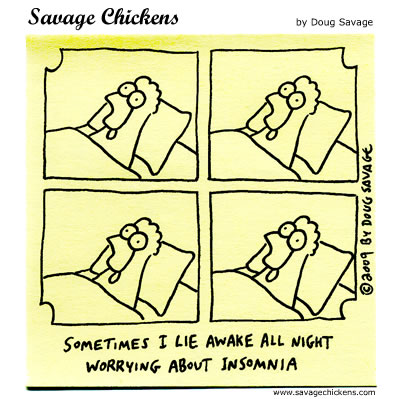
| I have a lot in common with this chicken. |
- Fourth day of sertraline, which means my fourth day of insomnia. I'm beginning to look like Edward Norton in the first minutes of Fight Club.
- Neighbors set their apartment on fire this morning. Nearly burned the whole place down. Woke at noon to the acrid smoke smell of toasted cheap furniture and kitchen appliances. Then fire trucks everywhere. Then some loud, equivocating machine whose function, I'm guessing, is to suck up poisonous fumes and store them for later.
- Woke up from melancholy dreams and searched for two specific poems I'd written two years ago on that very subject, only to find them, as had Hadley her husband's suitcase on the 1922 train to Lausanne, irretrievably lost. So I got it in my head to write a Jean Cocteau-ish little poem about waking up from a dream feeling that something is missing, and remembering that I'd made art about that very feeling, only to find it missing. Maybe also I was asleep? No. That's for later, when I disinter Jean Marais' corpse and re-raise the Orphic stakes.
- Here's the poem I did write today, which is rambling, turgid, and slipshod. I don't like it. But I wrote it anyway, all day.
Souvenir
I.
How like a memory without a mind,
Sensation: a built darkness in the body;
Feeling of forgetting, where the thread
Spins backward to the spider that it bound,
If only for an instant, to its spinning.
I woke this morning, missing what to miss,
As though to think the absence would revive it.
Not likely. What I want is to relive it,
Remember not remembering; to lose it
Over and over, to repeat the pain
Of close-to-satisfaction; to seize air.
Desire is like a planet, in whose pinion
Dying stars sophisticate their stare
Until there’s no more looking, only bone.
II.
More plain this time? Okay. I had a thought,
A reminiscence, flickering of a Proust.
I woke from dreaming, only to be used
To dreaming—wanting what is not.
By then, I’d grown attached to my desire,
But, sunlight like a Lethe, couldn’t know it.
I lay in bed, still poking at the fire,
Tracing the shadow that had sunk below it.
So like some Plato’s scavenger, I ate
Its ashes—not the glistening on the wall,
As chained men do—but let the fire burn out
Completely, then, with fury in my gut,
Turned hunger to its poverty, and, well,
The will is appetite; I let it wait.
III.
Too French? I’ll try again—the middle style.
This morning, I woke up, and when I did,
Remembered. . . nothing. . . not a grief or giddy
Rapt sensation—just a sense of missing.
What? I don’t know, and didn’t know it then.
But I suspected if I lay a while
And wondered at the nothing, I would soon.
I didn’t. So I got up, and, while dressing,
Suddenly thought about that line by Clare:
“I am the self-consumer of my woes.”
Perhaps the nothing that I woke to was
My own sensation, that I want to want?
That underneath my longing is a haunt?
Or maybe I’m just lonely, frank, and fearful.
IV.
Fuck it. A final effort. Get it right.
I went to bed feeling the scattered light
From some old, vacant corner of my mind
Illuminate, and blister, and make blind
Everything I had struggled to leave out:
That life is difficult, and knowledge, doubt,
And when we press our souls into a sieve
To strain them finer, it is they that give.
They buckle. And I feel it when I sleep,
The crack of bloated timber, and the creep
Of every thinning fiber as it slips.
I wake and feel unraveled as it rips.
I hunger for less nothing when I wake,
But know that with the sunlight comes the quake.
V.
No wonder that sensation makes me weak;
To feel the body, as a body, hurts.
It makes me less immortal in my lies;
And in my nerves, where the refusal burns
Electric-empty, the dry knocking chills me.
And as the body makes more body, I,
Reluctant to be anything but mind,
Forge cities from the fog that floats away,
Where all desire is a lust to dwell,
To be, to touch, to stay where form is certain,
Where nothing changes but the day of week,
And, even then, repeats its interval
To wind the brains of madmen like a watch.
There, in the unreal city, pleasure is control.
VI.
Letting go is learning to be sure
Of nothing. Waking up, desiring, dying,
What’s the difference? Anything is real.
Why should I worry at the cost? There is none.
This morning, when I woke to meet my fear,
Its cramp and clutter, and to care for it,
I let my nothing be, and wondered at it,
Is this what dying feels like? Just a tiredness?
It’s so benign. And terrifying. And obscure.
Death. Loss, Banality. They sound like love.
I want to let go, as I write this poem,
To learn to be more lonely, to be close,
And never not to feel it when I want you;
I must learn from my body how to die.
VII.
Close is a word we write when we mean separate—
Apart but moving toward each other, attracted
(Like Aristophanes’ carved animals)
To what we once remembered in what’s new.
The panicked heart needs splitting, and more spin.
More moving-to-it. More remoteness. More.
I want to remember what I never knew;
To breathe live innocence in lively bodies.
But isn’t waking a lesson in refusal?
Of course not. Sleep is when the soul remembers.
Waking decides the path and haste of pursuit,
Which half of the countless Halflings to be close to,
To desire, to feel lonely for, and to dream over.
Memory, like a muscle, opens and withdraws.
VIII.
Now scale it back. It’s easy to break through
But resting there is harder, where it’s stark
And lovely-clear like breathing. Practice darkness.
Wake with closed eyes, and keep them closed a while.
Loneliness makes closeness makes us whole
But appetite is an athletic peril,
And needs avoiding. Never trust in marvels;
Never refuse to marvel at them, though.
And when you go to sleep, and lose that thing
You call a person, summon it again
On waking, like the hero in a story.
He’ll suffer your deceit, and maybe hang
For petty crimes, or wander in the rain,
But he’ll be real enough until he’s buried.

I like it even if you don't.
ReplyDelete